 Menu
Menu
Our client Dr. Kimberly Hieftje and a group of researchers at XRPeds used one of the games we developed with them as a case study for a method paper called GamePlaybooks 2.0: An Updated Strategy for Supporting Game-Based Behavior Change Interventions. Cutie is a VR game about infection prevention developed by PreviewLabs and XRPeds at Yale School of Medicine for the Center for Disease Control and Prevention (CDC).
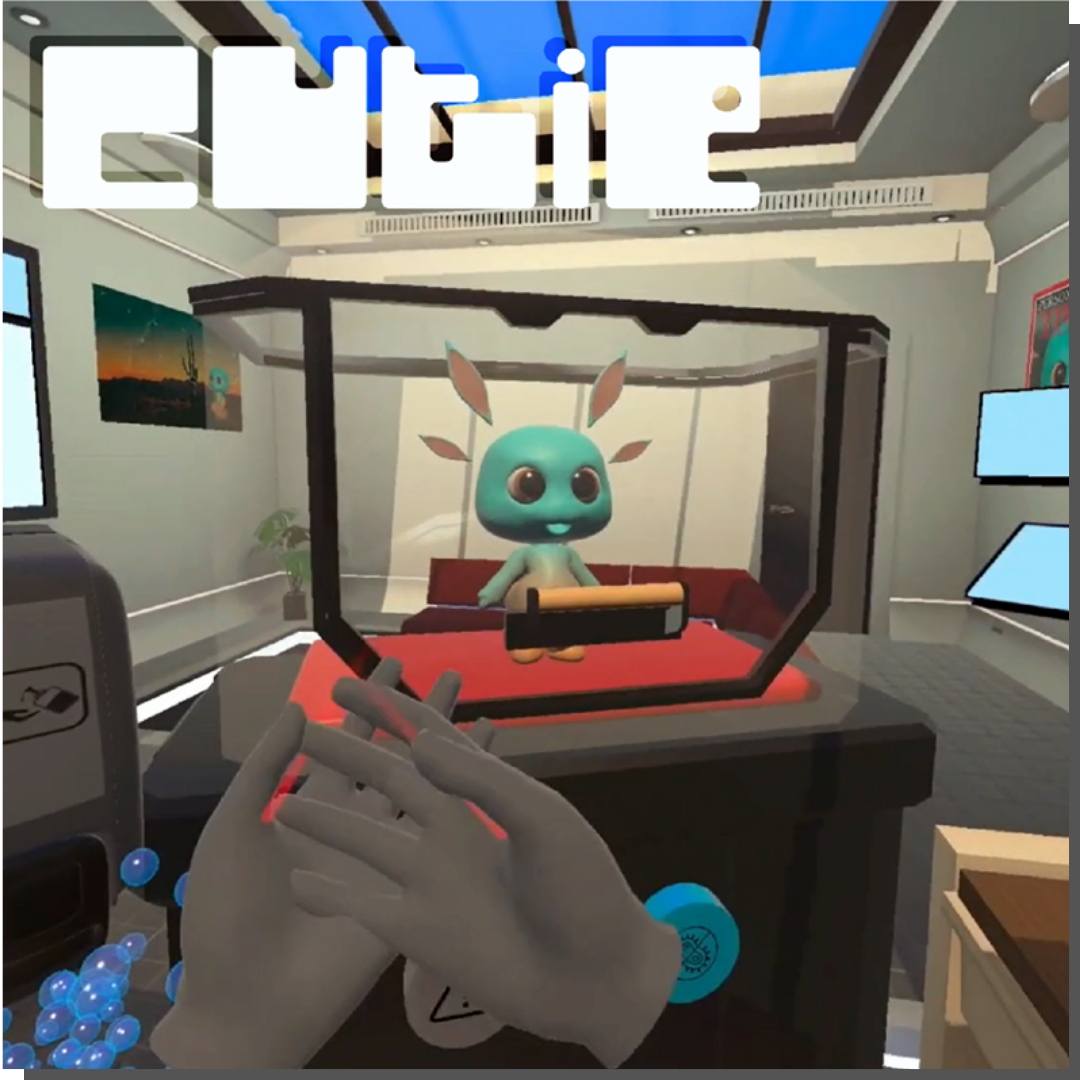
In Cutie, the player has to take care of an alien ambassador that is vulnerable to Earth’s germs.
Cutie is a VR game for parents with a child in a neonatal intensive care unit (NICU). The player looks after the Cutie, an alien ambassador who is highly vulnerable to Earth germs. Its vulnerability is very similar to that of a newborn in a NICU. The player is asked to sanitize props, photograph Cutie for social media likes, and remind visitors to clean their hands.
What is a Game Playbook?
Games for health behavior change are built by mixed teams of health researchers, clinicians, game designers and developers, and each group has its own working documents. Game developers use game design documents. Health researchers use intervention manuals and logic models. A logic model traces how each part of an intervention leads to the outcome it is meant to change.
A Game Playbook combines both traditions in one shared, living document. In this paper, the researchers describe how they updated it over ten years of projects, with the Playbook for Cutie as the worked example.
Some insights from the Cutie Playbook include:
- The logic model links every game mechanic to an outcome. The updated Playbook adapts the logic model into a “conceptual model.” It runs from individual game mechanics, through the behavior change constructs they target, to the behaviors and overall goal of the project. In Cutie, the goal of reducing infection spread in the NICU traces back to a mechanic where players persuade visitors with different attitudes to wash their hands. That mechanic builds self-efficacy: the player’s confidence to ask others for good hygiene.
- Measure intentions when behavior is hard to track. Checking whether caregivers wash their hands more often in the hospital would require long-term monitoring. The conceptual model therefore marks player intentions as the point of assessment. Behavior change theory treats intention as a predictor of behavior, and intentions can be measured right after play.
- Choose the questionnaires before designing the game. A new Assessment Reference section lists validated questionnaires for each learning goal at the start of the project. That way, the game covers what the study will later measure. For Cutie, this included the World Health Organization’s Hand Hygiene Knowledge Questionnaire.
- Record formative research in the Playbook. Findings from focus groups are written into the document so they keep guiding design decisions. Cutie was first set in a simulated NICU. Nurses and parents found that setting too stressful, which led to the alien concept.
The Playbook also sets out which team writes which part. The research team writes the early sections on formative work, goals, theory and assessments. The game development team builds the game from those sections and records its design decisions in the Playbook as the game takes shape. As the developers of Cutie, this gave us one reference that explains why each mechanic exists and which outcome it serves. The paper notes this is especially useful when playtesting raises the question of what to change.
According to the authors, this approach helps teams avoid two common problems: a game that is fun but doesn’t get the message across, and one that covers the content but isn’t enjoyable to play.
The Playbook works alongside a conventional game design document as the shared reference for researchers and developers. You can read the full open-access paper here.