 Menu
Menu
Time to meet another member of the PreviewLabs team. Joren Dresselaers joined us as an intern from the Digital Arts and Entertainment track in Kortrijk and never quite left. Today, he’s still one of the dedicated game prototyping programmers at our office in Wetteren.

Joren during a trip to The Efteling, a theme park in The Netherlands.
Q: You started at PreviewLabs as an intern and ended up applying for a full-time position. What made you want to stick around?
A: When I was looking for a company to intern at, PreviewLabs stood out because of its focus on prototyping. Working on prototypes meant getting involved in a lot of different projects within a short timeframe, which is a great way to learn when you are just starting out.
After my internship, it was mainly the team that made me want to stick around. It is really the people that make this place. We spend a lot of time together, on projects but also just hanging out. Every Friday we play multiplayer games over lunch. Right now, we are all-in on Overwatch, for example.
Q: PreviewLabs has team members across multiple continents. How do you manage to remain a tight-knit team while working so many miles apart?
A: We have a company-wide call every two days, and on top of that I stay in touch routinely with whoever I am working with on a project. The team is international, but it’s still small enough to genuinely know everyone. The Friday gaming sessions include our colleagues in America as well, by the way. The server ping is horrible at times, but it’s worth enduring as long as it means we can bond as a team.

The PreviewLabs team was one of the main reasons for Joren (crouched in the middle here) to stick around after his internship.
Q: What does a regular workday look like for you?
A: We start every morning with a sync with the team. We check up on our priorities and see where people might need a hand. After that, I structure my day around the aforementioned priorities and get into the work. That’s pretty much it. If there are no other meetings to be had, you will find me at my desk working on prototypes.
Q: Prototyping is an essential part of many bigger projects. Yet, there are many misconceptions about them. What do people tend to get wrong about prototyping?
A: People sometimes assume prototyping means building something without a clear goal. A good prototype always has a very specific question behind it. Does this mechanic work? Is this feature actually fun? Can we pull off this technology at all?
Together with our clients, we define these questions before we start developing. Every project starts with an elaborate prototype design document that lays out exactly what we want to test and why. If the prototype answers that question, it is a success. Even when the answer is that the idea does not work, it is a useful insight. This means our client can allocate their budget toward other, more impactful things.
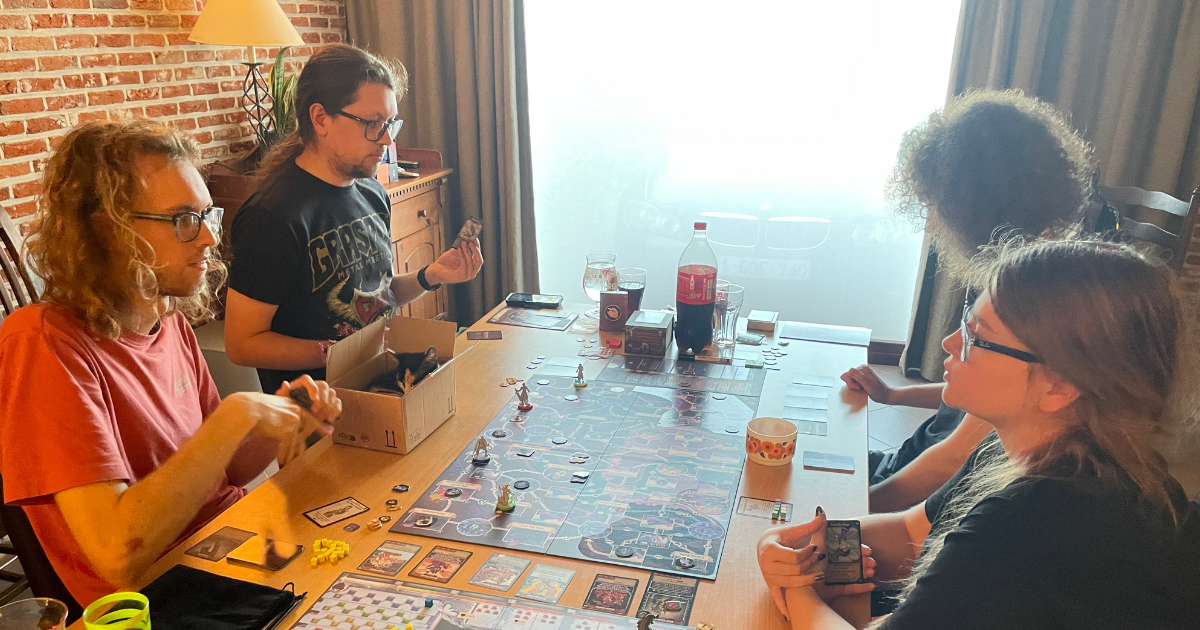
Joren loves playing strategy-focused games with his friends, both in digital and physical form.
Q: Is there a type of project you particularly enjoy working on?
A: Dialogue systems. I worked on those during my internship as well, so there is a bit of a through-line there. Narrative games have always interested me. The way players can interact with characters and shape a story. What makes dialogue systems fun to prototype, is that there are so many ways to approach them. You can try very different things and see what actually holds up.
Q: I can imagine that such systems are changing fast with large language models in the picture. Has AI changed how you work?
A: It has come up in several prototypes (keep an eye on our blog, we will announce more details soon). Integrating an LLM into a dialogue system is a genuinely different problem from building a traditional one. With a traditional system you know exactly what you are going to get. With an LLM you do not, which means you have to work a lot harder to keep things consistent. Careful prompting, constraints, sometimes multiple models checking each other. There is a lot of trial and error involved.
“A prototype almost always has a very specific question behind it. Does this mechanic work? Is this feature actually fun? Can we pull off this technology at all?”
Q: Is there a technical challenge you came across at PreviewLabs that stands out?
A: One project during my internship involved eye tracking on a smartphone. I had to figure out how to track eye movements using the phone camera and use that to control an application. There were existing libraries that got you part of the way there, but making it actually reliable was a different story. It took a while.
Q: What technologies would you still like to get your hands on?
A: Full-body tracking. During my studies I worked with the Xbox Kinect and built mechanics around tracking a player’s whole body. That type of input is interesting because it is not just a different control scheme, it changes how someone inhabits the game world. I would like to explore that further.
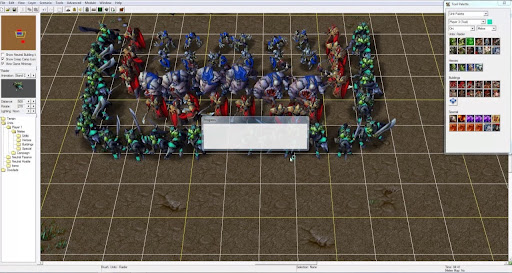
The WarCraft III world editor influenced Joren’s approach to game development.
Q: What are you into outside of work?
A: Gaming, mostly. I play a lot of World of Warcraft and I love strategy games like StarCraft and Civilization. I tend to like games that allow you to sink a lot of time in them and actually require you to think. I also play Dungeons and Dragons most weekends, which bleeds into the interest in narrative systems I mentioned. And I work on small personal projects every now and then, usually as an excuse to experiment with something new.
Q: Are there games that have influenced your own work so far?
A: I would say that all of them have left an impact in some form. One thing that I have picked up from games like WarCraft III is to build things in a modular way, meaning I design something that a designer can use at will in a level. I definitely picked this up from toying around a lot with the WarCraft III level designer that allowed you to mix and match all of the modular components that made up that game to create new experiences.
Q: You seem very passionate about your hobbies. If I met you at an event, what subject do I have to bring up to get you going?
A: That’s an easy one: bring up Dungeons and Dragons and I’m off to the races. Fair warning though: I might go on a bit too long about its game systems and how gameplay and narrative go hand-in-hand.
Q: Let us reserve that topic for after this interview, then. Thank you so much for this chat! One last question to conclude: what is one thing that no-one at PreviewLabs knows about you yet?
A: Hmm, that’s a really tough question. We have a very open culture at PreviewLabs so I feel like everyone here knows all there is to know about me. That is what makes working here great: we can just truly be ourselves here!